If you run ads in the UK, you have felt it already.
Your ads bring traffic. Sales happen.
But dashboards don’t match reality.
Meta shows one number.
GA4 shows another.
Shopify shows something else.
Because of this, many UK brands now make decisions with half-truth data.
I see this weekly while auditing accounts.
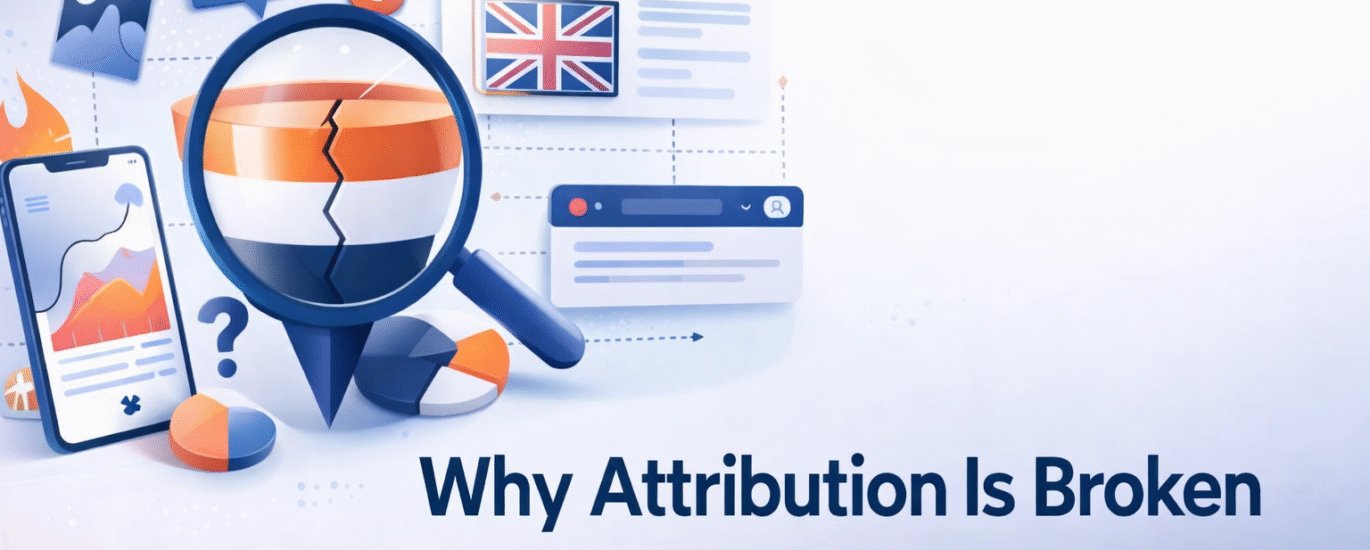
Let’s break down why attribution is broken and what you can actually do to fix it.
1. Privacy Changes Didn’t Just “Reduce Data”
They changed behaviour.
GDPR, cookie consent banners, iOS updates, and browser tracking limits all stack together.
As a result:
- Users decline cookies
- Sessions break across devices
- Click paths disappear
So attribution tools guess more than they track.
That means last-click data lies.
And platform-reported ROAS looks inflated.
2. GA4 Is Not Built for Simple Answers
GA4 is powerful.
But it’s not beginner-friendly.
Most UK brands:
- Don’t configure events properly
- Miss key conversions
- Rely on default attribution models
So GA4 underreports paid traffic impact.
Meanwhile, Meta reports view-through conversions that GA4 ignores.
This creates confusion and mistrust.
3. Customers Don’t Buy in One Click Anymore
This is the biggest truth most dashboards miss.
A real UK buyer journey looks like this:
- Instagram ad → no action
- Google search next day
- Brand visit via direct
- Purchase after email or WhatsApp
No single platform owns that sale.
So attribution tools fight for credit.
4. ROAS Is Not a Single Number Anymore
If you still judge performance only by ROAS, you are flying blind.
Instead, smart UK brands track:
- MER (Marketing Efficiency Ratio)
- Blended CAC
- Revenue lift vs baseline
- Assisted conversions
This gives a truer growth picture.
5. How UK Brands Can Fix Attribution (Practically)
Here’s what actually works in 2026.
Step 1: Clean Tracking First
Set up GA4 events properly.
Verify Meta Pixel + CAPI.
Fix UTM consistency.
No shortcuts here.
Step 2: Accept Directional Data
Stop chasing exact numbers.
Use trends, not absolutes.
If spend goes up and revenue lifts across channels, attribution is working.
Step 3: Use Platform Data for Optimisation, Not Truth
Let Meta optimise on its data.
Let Google optimise on intent.
But measure success outside platforms.
Step 4: Track Business Metrics Weekly
Focus on:
- Total revenue
- New vs returning customers
- Cost per acquisition (blended)
This aligns marketing with business reality.
6. Attribution Is a Strategy Problem, Not a Tool Problem
Tools don’t fail on their own.
Expectations do.
UK brands that win now:
- Build multi-touch funnels
- Educate teams on attribution limits
- Judge marketing by impact, not dashboards
That mindset shift changes everything.
If you want better creatives, clearer tracking, and smarter growth decisions, follow Design Shop for Marketing Creatives on Instagram Follow Now
They consistently share practical design ideas that improve ad performance.
You can also follow Allmyclicks on Instagram 👉 Visit Now
We break down real ad data, funnels, and mistakes UK brands keep repeating.
For deeper audits, frameworks, and performance marketing support, visit 👉 See Home Page
Or message directly on WhatsApp for quick guidance 👉 Chat Now
Attribution isn’t dead.
It just needs smarter thinking.
If you want help fixing it the right way, you know where to find us.