For years, Lookalike Audiences were the backbone of paid ads.
Marketers loved them.
They were easy to use.
They scaled fast.
However, things have changed.
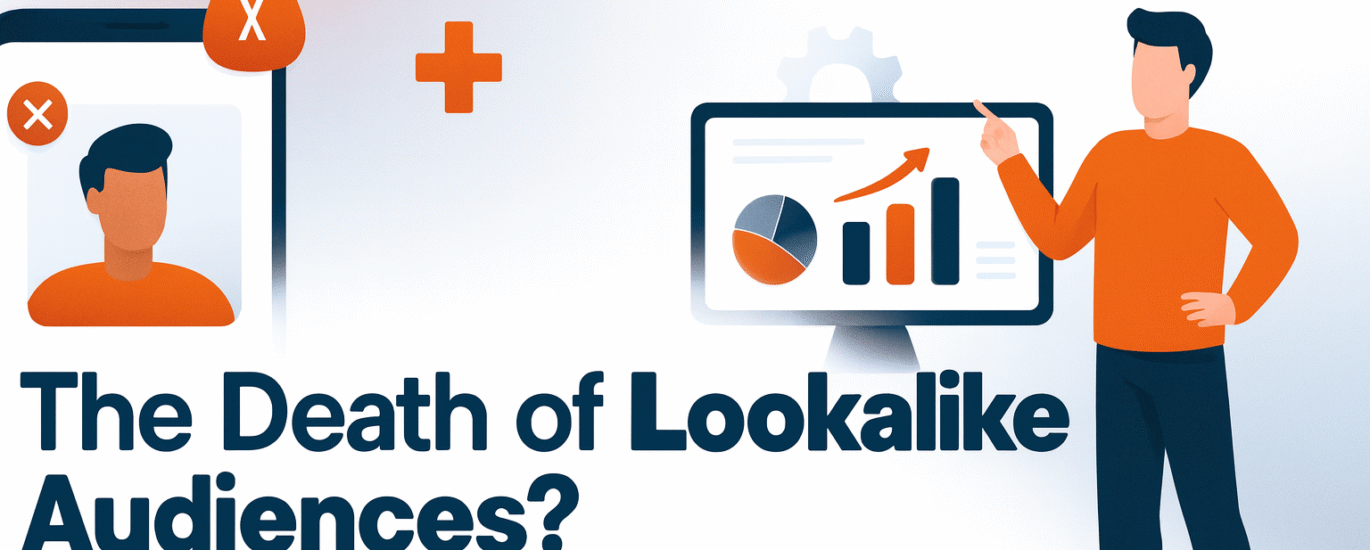
Privacy updates, cookie loss, and platform AI have slowly reduced their power. As a result, many advertisers now ask the same question.
Are Lookalike Audiences dead?
The short answer is no.
But they are no longer the hero.
Let’s break this down clearly.
Why Lookalike Audiences Are Losing Power
Earlier, platforms had deep user data.
They tracked behaviour across apps and websites.
So, Lookalikes worked well.
However, privacy rules changed everything.
First, Apple introduced iOS privacy updates.
Then, browsers started blocking third-party cookies.
At the same time, Meta and Google lost signal quality.
Because of this, seed audiences became weaker.
Pixel data reduced.
Events dropped.
User matching became harder.
As a result, Lookalikes today rely on less accurate data.
So performance dropped for many accounts.
Still, this does not mean Lookalikes are useless.
It simply means they are no longer enough.
The Bigger Shift: Platforms Now Think for You
This is the most important change.
Ad platforms now use AI heavily.
They want more freedom.
They want more data.
Therefore, strict targeting limits performance.
Meta’s algorithm works best when it has space to learn.
Google’s Performance Max works the same way.
So instead of asking, “Who should I target?”
The better question is, “What signal should I give?”
What Is Replacing Lookalike Audiences?
Let’s talk about what actually works now.
1. Broad Targeting With Strong Signals
Broad targeting is no longer risky.
In fact, it often outperforms Lookalikes.
Why?
Because AI finds patterns faster than manual targeting.
However, this works only if signals are strong.
Good signals include:
• Purchase events
• High-quality leads
• Longer session duration
• Add to cart actions
So instead of narrow audiences, feed the algorithm better data.
2. First-Party Data Is the New Gold
Your own data now matters the most.
This includes:
• Website visitors
• Email lists
• WhatsApp leads
• CRM data
• Past buyers
Unlike Lookalikes, first-party data stays reliable.
Even better, platforms trust this data more.
So matching improves.
Smart marketers focus on collecting data properly.
Then they use it across Meta, Google, and email.
3. Creative Is the New Targeting
This is a big shift.
Today, ads target people through content.
Not interests.
Different creatives attract different users.
For example:
One video speaks to beginners.
Another speaks to experts.
Another focuses on price.
Meta’s AI matches creatives to users automatically.
So instead of building many audiences, build many angles.
This strategy scales faster.
It also survives privacy changes.
4. Intent-Based Targeting on Google
While social ads lost data, search ads gained value.
Google Search captures intent.
Users tell you what they want.
So keyword targeting replaces interest guessing.
Also, Performance Max uses signals across YouTube, Search, and Display.
This makes Google a strong replacement channel for Lookalike-heavy strategies.
5. Server-Side Tracking and Better Measurement
Tracking quality decides everything now.
Without proper tracking, AI learns slowly.
That is why smart brands use:
• GA4
• Server-side tracking
• Conversion APIs
• Clean event setup
Better tracking improves optimisation.
And better optimisation reduces dependency on Lookalikes.
So, Are Lookalike Audiences Dead?
No.
But they are no longer the main strategy.
They work best as support layers.
Not as the foundation.
The real winners today focus on:
• Broad targeting
• First-party data
• Strong creatives
• Clean tracking
• AI-friendly setups
If you still rely only on Lookalikes, growth will slow.
Final Thoughts
Digital marketing is not about control anymore.
It is about guidance.
Platforms want direction, not restrictions.
If you adapt early, results improve.
If you stay stuck, costs rise.
At Allmyclicks, we help brands shift from old targeting habits to modern, AI-driven strategies that actually scale.
The future is already here.
Smart marketers are already testing it.