Predictive analytics is changing digital marketing faster than many brands expected. Earlier, marketers focused on past data. They looked at what happened yesterday and made decisions for tomorrow. However, predictive analytics does the opposite. It looks forward and shows what will likely happen next. As a result, the entire ad funnel becomes smarter, tighter, and more efficient.
Before we go deeper, here’s a quick note:
If you want a performance marketing partner who sets up predictive funnels with clean tracking, smart targeting, and better ROAS, you can visit my homepage → Allmyclicks.com.
Why Predictive Analytics Matters Today
Digital ad platforms now run on AI. Because of this shift, interest targeting has become less important. Instead, the algorithm predicts user behaviour based on thousands of signals.
It checks things like:
- How likely someone will click
- How likely someone will add to cart
- How likely someone will purchase
This prediction makes the ad funnel stronger. Moreover, it reduces guesswork and improves efficiency over time.
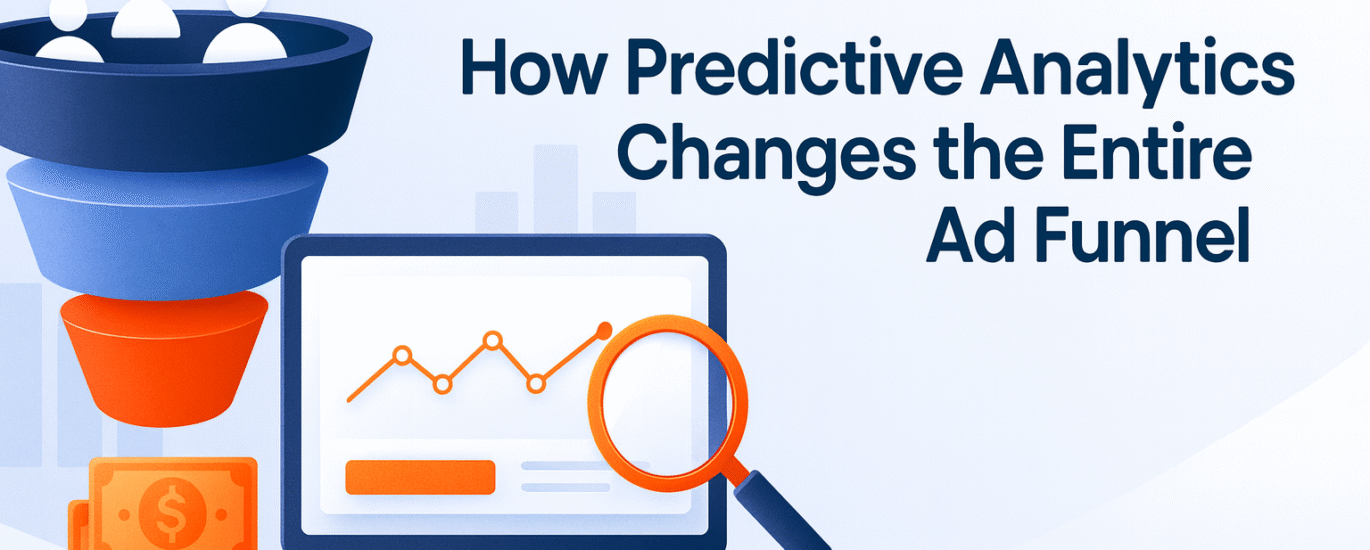
How Predictive Analytics Changes Every Stage of the Funnel
1. Awareness Stage (Top of Funnel)
Earlier, TOF depended on broad targeting or interests. But now predictive analytics studies real-time patterns. As a result, the platform finds people who look similar to converters, even if they never interacted with your brand.
So your ads reach users who have a high probability of becoming customers. This improves reach quality without increasing cost.
2. Consideration Stage (Middle of Funnel)
The middle funnel usually struggles because users drop off. But predictive analytics fixes this.
It tracks:
- Scroll behaviour
- Time on page
- Engagement patterns
- Add-to-cart probability
Then it sends personalised ads, better creatives, and relevant messaging. As a result, the user re-enters the funnel with stronger intent.
Moreover, your remarketing pool becomes more efficient.
3. Conversion Stage (Bottom of Funnel)
Predictive models identify the exact users who are most likely to convert today.
This helps platforms like Meta and Google:
- Adjust bids automatically
- Show stronger creatives
- Reduce wasted impressions
- Increase final purchase volume
The result is simple. You get lower CPA and higher ROAS.
Predictive Analytics Makes Creatives Smarter Too
Many people think predictive analytics only affects targeting. But it reshapes creatives as well.
Because platforms predict which creative format performs best, they automatically push winning variations.
For example:
- If a specific hook performs well, Meta shows it more.
- If a certain colour triggers more clicks, Google uses it more.
- If short videos convert more, the system increases their delivery.
So the creative funnel becomes dynamic instead of static.
Predictive Analytics Builds Better Customer Journeys
Another big change is journey mapping.
Predictive tools now understand:
- When users engage
- When they drop
- What message works best
- What timing improves conversions
Therefore the system delivers ads at the right moment, with the right message, and to the right user.
This creates a smoother funnel flow from awareness to purchase.
Why Predictive Analytics Increases Profits
In simple words, predictive analytics reduces waste.
It sends ads only to high-intent audiences. It avoids cold, low-quality users. And it helps you scale faster because the algorithm is trained on patterns instead of interest logic.
Brands using predictive analytics see:
- Higher conversion rates
- Lower cost per lead
- Better ROAS
- Faster scaling
- More accurate audience pools
Final Thoughts
Predictive analytics is not the future anymore. It is the present.
As ad platforms get smarter, marketers must shift from manual targeting to predictive-driven funnels. The brands that adapt early will see bigger gains, smoother funnels, and stronger results.
If you want to build a predictive-driven ad funnel with clean tracking and smart creative strategy, feel free to visit my main site → Allmyclicks.com.